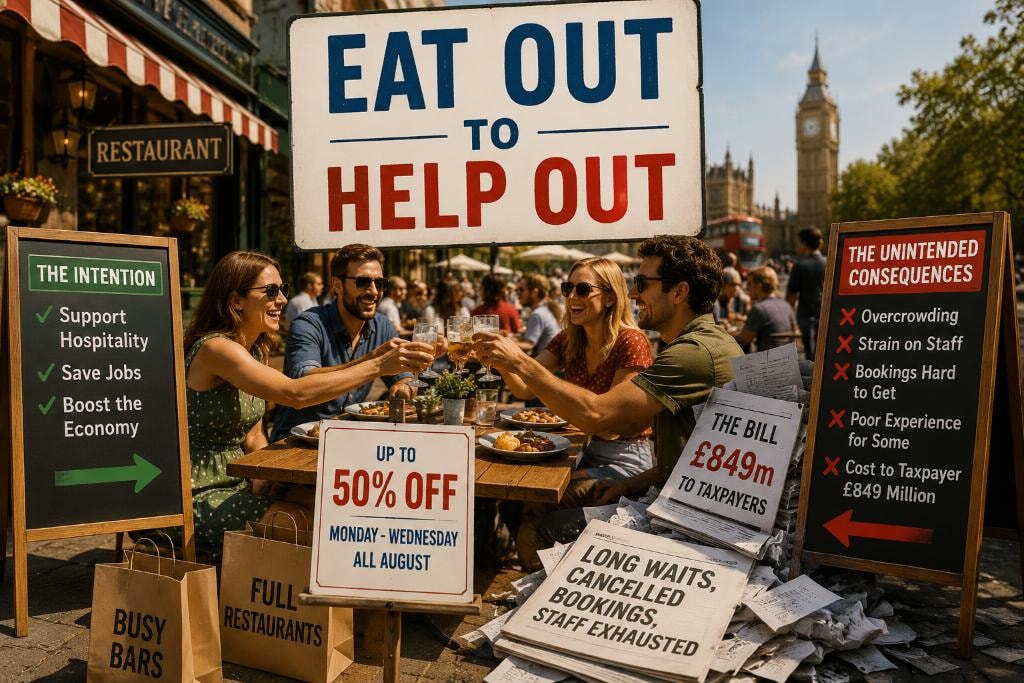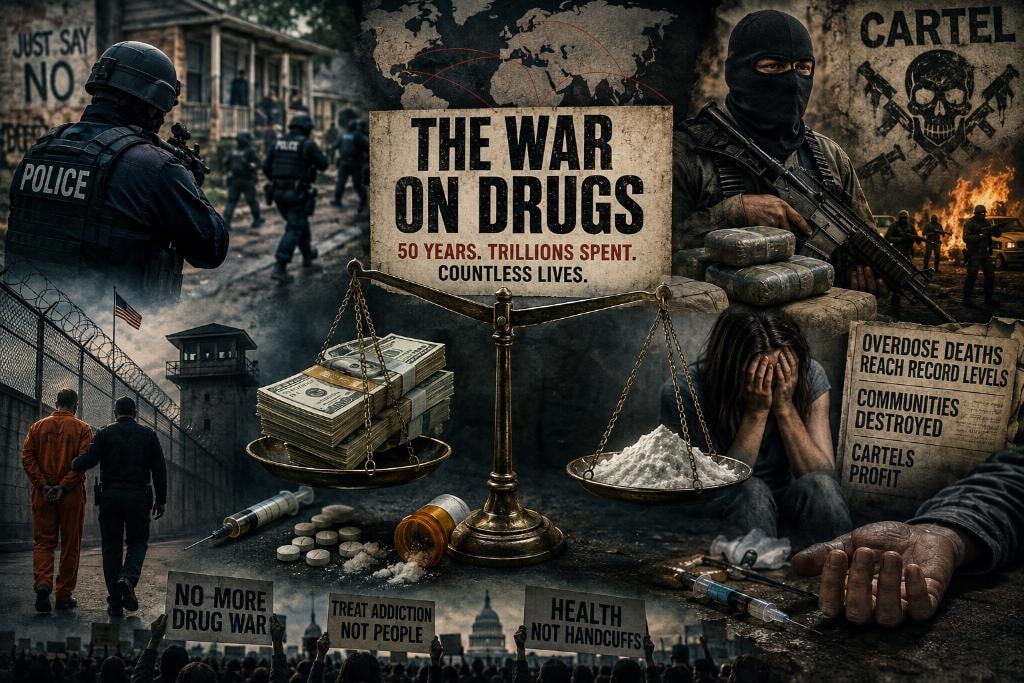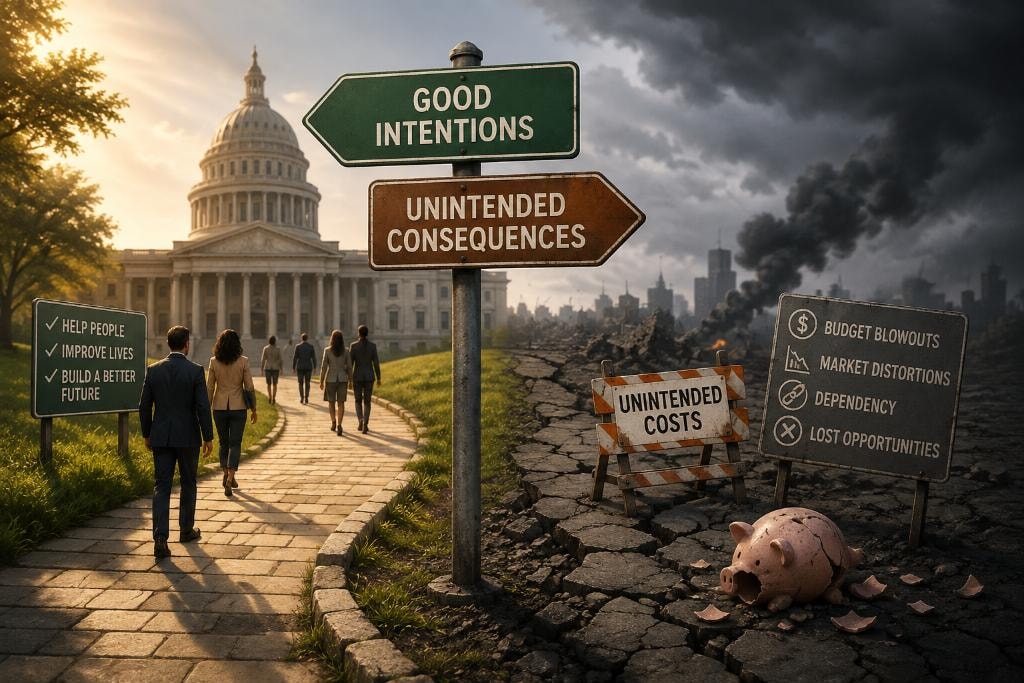
Every major policy failure in modern history shares a common thread: it began with genuine good intentions. The architects of rent control wanted affordable housing. The designers of the War on Drugs wanted safer communities. The proponents of foreign aid wanted to lift nations out of poverty. What they got was something else entirely.
The economist Frédéric Bastiat identified the core problem in 1850: the seen and the unseen. A policy's immediate, visible effects are easy to measure and celebrate. Its second and third-order consequences — the jobs not created, the housing not built, the incentives distorted — are invisible until it is too late.
Consider the minimum wage. The seen effect: workers earning more per hour. The unseen: employers automating, reducing hours, or simply closing. The Congressional Budget Office estimated that a $15 federal minimum wage would lift 900,000 out of poverty and eliminate 1.4 million jobs. Both numbers are real. Only one gets the headline.
This is not an argument against policy. It is an argument for humility and for treating policy as an experiment rather than a decree, for building in feedback mechanisms, for acknowledging that the world is more complex than any model.
The most dangerous policymaker is not the corrupt one. It is the certain one. Certainty forecloses the possibility of learning. And in a complex adaptive system like a modern economy, the inability to learn is fatal.